







-
Upload photo
Re-upload
Accepting: jpg, png. Max file size: 10 MB
What is the difference between OEM, ODM and CM ?
By Dan Harris
This post outlines how creating a clear manufacturing agreement can alleviate the various legal issues inherent in manufacturing overseas. Before we discuss the key terms for your manufacturing contract, we will briefly address why it is so important to have such a contract at all, even in countries with weak legal systems.
Most manufacturing contracts we draft involve one of three different types of manufacturing arrangements: Original Equipment Manufacturing (OEM), Contract Manufacturing (CM), and Original Design Manufacturing (ODM). This post examines how these three different arrangements influence various legal issues inherent to overseas manufacturing.
What is OEM Manufacturing?
OEM Stands for Original Equipment Manufacturing
In this arrangement, the foreign buyer purchases a product from a foreign country factory that is already being manufactured by that factory. The product buyer then “packages” this product with its own trademark and logo. The buyer and the factory may agree to certain cosmetic changes (color, shape, minor added features) that further customize the product for the buyer.
In this sort of OEM arrangement, intellectual property (IP) is usually clear: the buyer owns its branding (trademarks, logos, and packaging) and the factory owns the product. The difficulty arises once the product is customized. Who owns the IP once the buyer has made changes to the product? An OEM agreement can provide clarity here. Usually, the buyer seeks to restrict the factory from using customization in selling the base product to third parties.
Tips: Finding Reliable Verified OEM Suppliers on Global Sources
As one of the world's largest facilitators of Business to Business (B2B) trade for over 50 years, Global Sources has provided buyers from all over the world access to hot new products as well as qualified B2B lead generation to China manufacturers. You will find tens of thousands of OEM manufacturers on the Global Sources B2B website.
What is CM Manufacturing?
CM Stands for Contract Manufacturing
In this arrangement, the foreign buyer has a fully developed product design. Traditionally, this design was of a product that had been manufactured by the buyer in its home country. More recently, the product is a new design being manufactured for the first time overseas. In a CM arrangement, ownership may seem simple: the foreign buyer owns all the IP, both in design and branding, and the factory owns nothing. In practice, however, the division is not always so clear. For example, your factory may change your product’s design and use those design changes to modify its own products it sells in direct competition with your products. Difficulties exist in every contract manufacturing project and they can be resolved with a clear, written agreement.
What is ODM Manufacturing?
ODM Stands for Original Design Manufacturing
As outsourced factories are becoming more technically competent, foreign buyers have started entering into arrangements in which their overseas factory does some or all the design work for the product. There are many variations on this ODM approach. In its most fundamental form, the foreign buyer provides drawings and a specification sheet and the overseas factory does the rest of the work in consultation with the buyer.
Under this sort of arrangement, the obvious question is who owns the design of the product? Both the foreign buyer and its overseas factory will claim ownership of the design using conflicting arguments. The overseas factory will agree to make the product on an exclusive basis for the foreign buyer, but the foreign buyer does not have the right to have the product made by a third-party factory. This position can come as a bad surprise to the foreign buyer, particularly when its overseas factory suddenly announces it will be doubling the price for manufacturing the product. These issues can get even more complex when the product incorporates or is based on technology clearly owned by the overseas factory. In this setting, the factory will often state that the buyer can go anywhere it wants to manufacture the buyer’s own portion of the product design, but no third party factory can make use of the factory’s proprietary technology in the manufacturing process. Consider this case for a foreign buyer who has spent considerable time and effort developing a product design only to learn after a year that it's overseas factory has decided to terminate the manufacturing agreement.
Once again, the only way to resolve these issues is to confront them in advance with a detailed written ODM agreement that sets out a resolution to these issues that is fair to both sides. There is no simple, legal default answer to any of these difficult issues. Or, rather, the legal default in most countries will favor the position of the overseas factory. Absent a clear agreement on how to proceed, the foreign buyer will lose pretty much every time.
Also Read: How to safely source and sell products on GlobalSources.com
Top Picks that are Ready to Order for Your Online Business Ideas
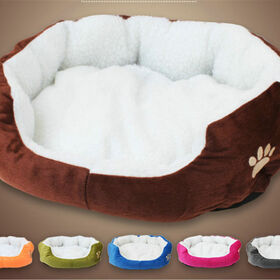
Shanghai Vinton Intl Trading Co.,Ltd
Why to have a contract with your manufacturer
There are three reasons why it makes sense to have a contract with your manufacturer and only one of those reasons is enforceability in court:
1. Clarity.
- Having a well-written contract in the language of the manufacturing country will ensure that your manufacturer understands exactly what you want. For example, including a clause in your contract that fines the supplier for each day late will let your supplier know that you are serious about your manufacturing deadlines. At least half of the disputes we see between foreign manufacturers and their buyers from different countries stem more from cultural-linguistic misunderstandings as opposed to animus.
2. Prevention.
- A well-crafted manufacturing contract with well-crafted damages provisions will convince your manufacturer that it will be better off complying with your contract than violating it. If your contract has clear and strict written deadlines, your manufacturer will give your products priority over its buyers without clear and strict written deadlines when it is facing a production crunch.
3. Enforceability.
- Our law firm has written hundreds of manufacturing contracts and yet we have never been called to litigate any of them. This means that we cannot speak regarding the enforcement of our own manufacturing contracts, but we can say that when our firm’s international litigators have sued or threatened to sue or arbitrated or threatened to arbitrate on well-written manufacturing contracts drafted by other law firms, we have seen the benefits of having a quality contract, even in countries notoriously bad at contract enforcement.
If your foreign manufacturer believes your manufacturing contract will be enforced it likely will act accordingly. Similarly, if your foreign manufacturer believes no court will enforce your manufacturing contract, it likely will act accordingly.
Asia has become the main location for start-up companies with an innovative product concept but no manufacturing facility. The most common form of ODM for foreign start-ups in Asia is some form of co-development. Under the old model of co-development, IP ownership was clear: the foreign entity paid the fee and had 100% ownership of the product. The issue our manufacturing lawyers keep encountering is that the legal consciousness of the parties to these transactions is stuck in the old model of straight development for a fee. But the issues that arise under the new, co-development model are quite different from the former “straight” development model.
Basic issues to consider in an overseas co-development project
The basic issues to consider in an overseas co-development project are as follows:
- Will your overseas factory do the development work at its own expense or will you pay for the development work?
- What is the time schedule for the product development work?
- What is the final price goal for the product
- What exactly are the “deliverables” and what is the process for determining whether the deliverables meet your goals?
- Who will design and manufacture the molds and tooling? For more on molds check out Overseas Manufacturing: How To Hang On To YOUR Molds
Though these five issues are normally difficult to resolve, they actually are the easy part of the process. The more difficult issue is who owns what with respect to the intellectual property in the product. Determining that your overseas factory owns 50% and you own 50% may be relevant for allocating income from the commercialization of the IP, but it does not tell you anything useful on the practical level of manufacturing the product
A foreign buyer that wishes to move its production to a different factory can legally do so only if it own s100% of the IP; if the overseas factory owns part of all of the IP the foreign buyer cannot legally switch its production to a new factory without a license or permission from its overseas factory.
Overseas factories on Intellectual Property
Overseas factories will usually take the following positions regarding IP:
- The foreign buyer owns the exterior design (design patent) for the product. The customer owns its trademarks and logos.
- The overseas factory owns the core intellectual property for the product.
- The overseas factory agrees to manufacture the product for the foreign buyer on an exclusive basis. However, the overseas factory is free to continue using the core intellectual property in manufacturing for itself and in manufacturing products for other customers. This includes the overseas factory manufacturing products that will directly compete with the foreign buyer’s product. The only limitation on the overseas factory is that it cannot employ its IP to manufacture a product that uses the exterior design, trademark or logo of the foreign customer.
- The foreign buyer cannot take have its product made by any other factory.
Critical issues that arise at the production stage
If your overseas factory takes the “you cannot go anywhere else” approach you will need to consider critical issues that arise at the production stage. Specifically, you will need to consider what will happen in the following common situations:
- The overseas factory raises its price to an unacceptable level.
- The overseas factory cannot meet your quantity or time of delivery requirements.
- The quality of the product is not acceptable. There are consistently too many defects.
- The overseas factory decides to stop manufacturing for you because it decides to manufacture a similar product for itself or for a larger company that generates larger or more consistent orders.
When these things happen, the remedy is to move to a different factory. Your ability to switch to a new overseas factory is what keeps your existing overseas factory “under control.” Now consider the situation where you cannot move your production to a different overseas factory. This puts you at the mercy of the factory and this is a situation you must avoid. For more on why it is so important to avoid this sort of situation, check out, China and The Internet of Things and How to Destroy Your Own Company, where we talk about companies that have come to our law firm too late.
The international standard for intellectual property manufacturing issues
The international standard for dealing with the above intellectual property manufacturing issues is as follows:
- The overseas factory must make your product for you for so long as you are interested in the product. If the factory chooses to stop making your product for you, it must provide you with a royalty-free license to the technology necessary for you to be able to manufacture your product in a different factory. If the factory wants to avoid this result it must continue to manufacture your product for you.
- The overseas factory is locked into a specific price for a specific period. Assuming a long-term production arrangement there probably will be valid reasons for the factory to raise or lower the price. For example, exchange rate fluctuation can be a good reason to go in either direction on price. To provide for reasonable price changes, your contract should provide a mechanism for annual price adjustments. This mechanism can range from a simple index to a complex formula that accounts for multiple factors.
- There are two primary mechanisms for dealing with the quantity/time issue. The first is to develop a production schedule that binds both parties. The second is to provide that if your factory is unable to meet your requirements it is contractually required to license production at an alternative location in the quantity necessary to meet the excess requirements.
- Your manufacturing contract should provide for the situation where your overseas factory consistently violates your quality standards by giving you the right to terminate the manufacturing contract for breach. Your contract should state that if you terminate your manufacturing contract because of a breach by your overseas factory, your factory automatically licenses you to manufacture your product in a different factory. Some overseas factories will claim this rule allows you to claim breach simply to switch to a new factory. If this is a genuine concern, your agreement can provide for dispute resolution focused solely on this issue.
Though the above provisions are both fair and standard in international custom design and manufacturing, many overseas manufacturers refuse to discuss these matters or to accept a reasonable solution. The overseas factory knows its foreign buyer will be stuck and stuck is exactly where it wants its foreign buyer to be. Being stuck with a factory that behaves unreasonably is an unpleasant and usually very expensive experience. You should consider carefully whether you want to proceed in that kind of situation.
You do not want to be ambushed by these critical issues after you have spent considerable time and money in developing a product with a factory that will then hold you, hostage, at the production stage. See China and The Internet of Things and How to Destroy Your Own Company for a taste of what this can look like.
You need to get clear on these design and manufacturing and pricing and production and intellectual property issues from the start This means you need an ODM agreement that sets forth how they will be resolved.
Top Picks that are Ready to Order for Your Business
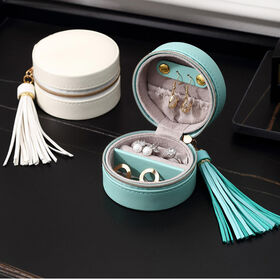
Shanghai Vinton Intl Trading Co.,Ltd
Dan Harris is the founder of the Harris Bricken law firm, a boutique international law firm focusing on small and medium-sized businesses that operate internationally. China is the fastest-growing area for the firm. Dan writes ChinaLawBlog.com as a source of China legal and business information.
People Also Like:
Ultimate Guide to China Sourcing
Sole Sourcing vs Single Sourcing vs Multiple Sourcing Category
Ultimate Guide: In-Depth Insights on Global Sourcing
Minimum Order Quantity (MOQ) Explained - Formula & Tips
Ultimate Guide to Buying in Bulk Online
8 Low-cost, High-profit Products to Sell Online in 2023
Source the latest products from verified suppliers via global sourcing platform, and subscribe to our magazines for more in-depth insights and product discovery.
Join the Smart China Sourcing Facebook Group
- Connect with other buyers
- Ask questions
- Get advice from experts